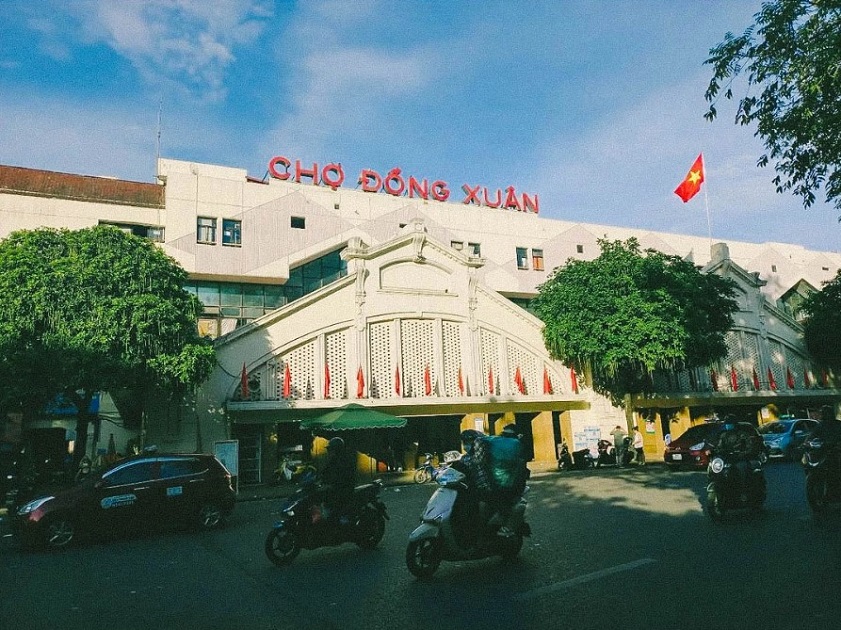
Phố Đồng Xuân dài khoảng 170 mét, chạy từ ngã tư Hàng Giấy-Hàng Khoai đến ngã tư Hàng Mã-Hàng Chiếu, nối tiếp phố Hàng Đường. Đi qua trước cửa chợ Đồng Xuân, con phố gắn bó mật thiết với hoạt động của khu chợ lớn và đời sống buôn bán trong khu phố cổ Hà Nội.

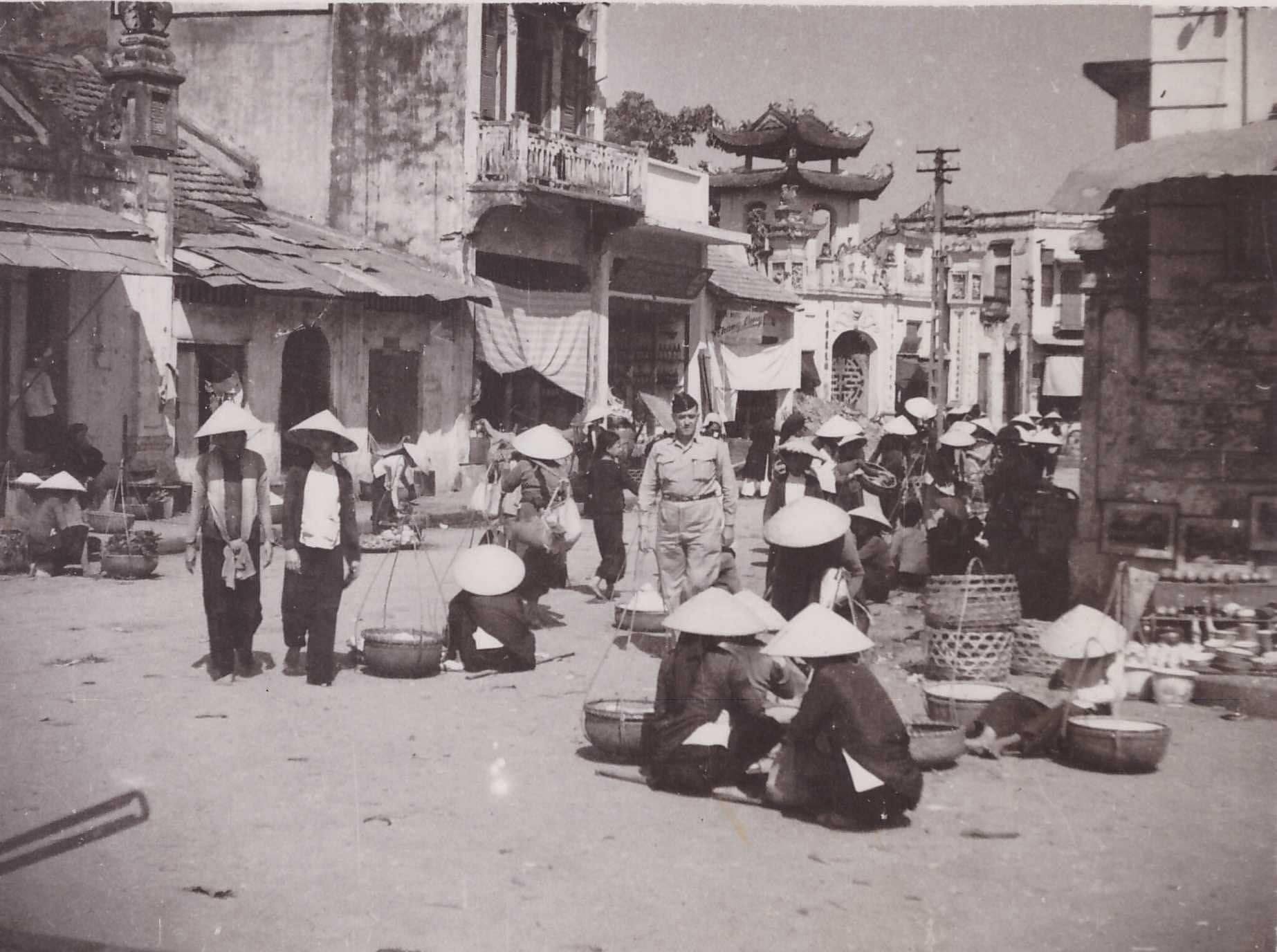
Trước đây, phố còn được gọi là Hàng Gạo. Thời Pháp thuộc, tên phố là Rue du Riz, cũng có nghĩa là phố Gạo. Tên gọi này xuất phát từ những hàng bán gạo và ngũ cốc thường họp trên khoảnh đất rộng phía trước chợ. Hàng hóa bày bán đã để lại dấu ấn trong tên phố, như nhiều phố “Hàng” khác của Hà Nội.
Khoảng trống trước chợ từng có bồn cỏ, ghế đá và những hàng cây tạo bóng mát. Khi tuyến xe điện Bờ Hồ-Chợ Bưởi còn hoạt động, nơi đây cũng là chỗ để các đoàn xe tránh nhau. Cửa chợ, đường phố và tuyến xe điện cùng tạo nên một không gian giao thương đông đúc, nơi người mua, người bán và hàng hóa liên tục qua lại.
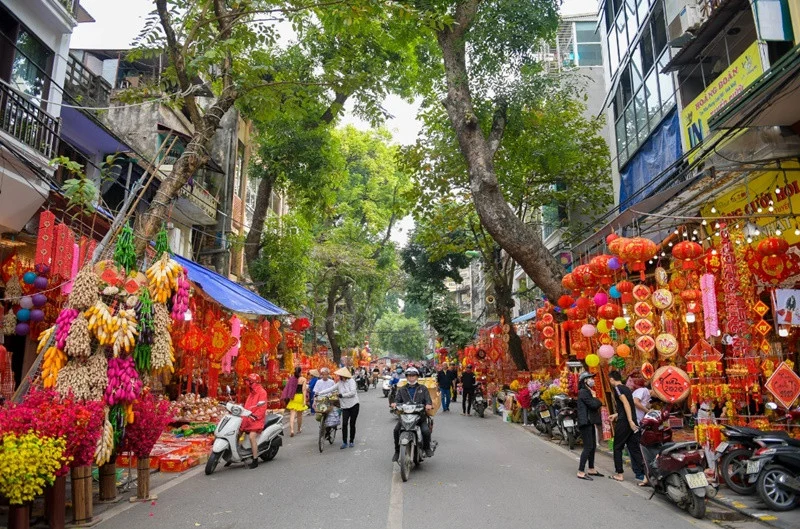
Tuy ngắn, phố Đồng Xuân có vị trí thuận lợi và từng được xem như một phần mở rộng của chợ. Các cửa hàng bán đồ khô dùng để nấu cỗ, hương trầm, hương đen, thuốc lào và thịt quay phục vụ đa dạng nhu cầu của cư dân. Những mặt hàng ấy cho thấy sự gắn bó giữa hoạt động buôn bán với sinh hoạt gia đình, lễ tiết và tín ngưỡng.
Đoạn giáp Hàng Đường có nhiều cửa hiệu bán đường, mứt và làm bánh ngọt truyền thống. Bánh xu xê, bánh gấc đỏ, bánh cốm xanh, oản bột và bánh khảo góp phần tạo nên sắc màu của phố, nhất là trong những dịp lễ, Tết. Các hiệu buôn tơ sợi, đóng giày và sản xuất bánh kẹo cũng làm phong phú thêm hoạt động thương mại.
Bên cạnh lịch sử buôn bán, phố còn gắn với Đồng Xuân thư quán, do vợ chồng ông Phạm Văn Hảo và bà Lê Thị Huệ phụ trách. Đây là hiệu sách công khai của Mặt trận Bình dân những năm 1936-1939. Hiệu sách là nơi lưu hành sách báo, tiếp nhận thư tín từ Pháp và gặp gỡ của những người hoạt động trong phong trào dân chủ. Giữa một khu phố chuyên doanh, địa điểm này ghi dấu hoạt động truyền bá tri thức và tư tưởng chính trị. Trong những ngày đầu Toàn quốc kháng chiến, phố Đồng Xuân cùng khu vực chợ trở thành một vị trí phòng ngự quan trọng ở phía tây bắc Liên khu I. Những căn nhà và cửa hàng từng phục vụ việc mua bán trở thành nơi các chiến sĩ chiến đấu bảo vệ Thủ đô. Ký ức ấy còn được tưởng nhớ qua bức phù điêu phía trước chợ.
Đi dọc phố Đồng Xuân hôm nay, quý khách có thể khám phá nhiều lớp lịch sử trên một đoạn đường ngắn: từ những hàng gạo, cửa hiệu bánh kẹo và tuyến xe điện xưa đến một hiệu sách và trận địa bảo vệ thành phố. Con phố lưu giữ ký ức về cả đời sống thường ngày lẫn những biến cố lớn của Hà Nội.
Approximately 170 metres long, Đồng Xuân Street extends from the Hàng Giấy - Hàng Khoai intersection to the Hàng Mã - Hàng Chiếu intersection, continuing onwards from Hàng Đường Street. Running past the entrance of Đồng Xuân Market, it is intimately intertwined with the operations of this major market and the broader commercial life of Hanoi’s Old Quarter.

In earlier times, the street was known as “Hàng Gạo” (Rice Street). During the French colonial period, it was officially designated as “Rue du Riz” (Rice Street), a literal translation reflecting its Vietnamese name. This moniker derived from the stalls selling rice and grain that traditionally congregated on the large open space in front of the market. As with many other “Hàng” streets in Hanoi, the commodities traded here permanently imprinted their identity upon the street’s name.
The open expanse before the market once featured manicured lawns, stone benches and rows of leafy shade trees. When the tramway connecting Hoàn Kiếm Lake with Bưởi Market was in operation, this area also served as a passing loop for trams travelling in opposite directions. The market entrance, the bustling street and the historic tramline collectively formed a vibrant hub of commerce, alive with the continuous movement of buyers, merchants and goods.
Despite its modest length, Đồng Xuân Street enjoyed a prime location and was virtually regarded as an extension of the market itself. Its shops traded in a variety of essentials, including dried ingredients for ceremonial feasts, incense sticks, water-pipe tobacco and roast meats. These provisions reflected the close synergy between everyday commerce, family rituals and traditional festivities.
Near its junction with Hàng Đường, numerous shops specialised in sugar, candied fruit and traditional confectionery. Delicacies such as “bánh xu xê” (chewy gelatinous mung bean cakes), “bánh gấc” (vibrant red Gấc-fruit cakes), “bánh cốm” (fragrant green young sticky rice cakes), “oản” (pyramidal votive rice cakes) and “bánh khảo” (sweet pressed glutinous rice cakes) lent a festive palette to the street, particularly during festival seasons and Tết – Lunar New Year. Further enriching its commercial diversity were establishments trading in textile threads, shoemaking workshops and confectionery shops.
Beyond its rich mercantile heritage, the street is historically associated with the “Đồng Xuân Thư Quán” (Đồng Xuân Bookshop), managed by Phạm Văn Hảo and his wife, Lê Thị Huệ. Operating as a legal bookstore under the auspices of the Popular Front between 1936 and 1939, it served as a vital distribution centre for progressive publications, a receiving point for correspondence from France, and a clandestine meeting place for activists of the democratic movement. Set right at the heart of a commercial district, this intellectual outpost became a beacon for the dissemination of knowledge and political ideas.
During the opening days of the National Resistance, Đồng Xuân Street and its adjoining market transformed into a crucial defensive bastion in the north-west of Interzone I. Buildings and shops that had long served peaceful commerce were repurposed into strongholds from which Vietnamese fighters valiantly defended the capital. This stirring chapter of history is commemorated by the bas-relief situated in front of the market today.
Strolling along Đồng Xuân Street today, visitors can uncover multiple layers of history within a compact stretch: from former rice stalls, heritage confectioners and vintage trams to a progressive bookshop and urban battlegrounds. The street thus preserves the poignant dual memory of ordinary daily life and momentous historical upheavals in the story of Hanoi.