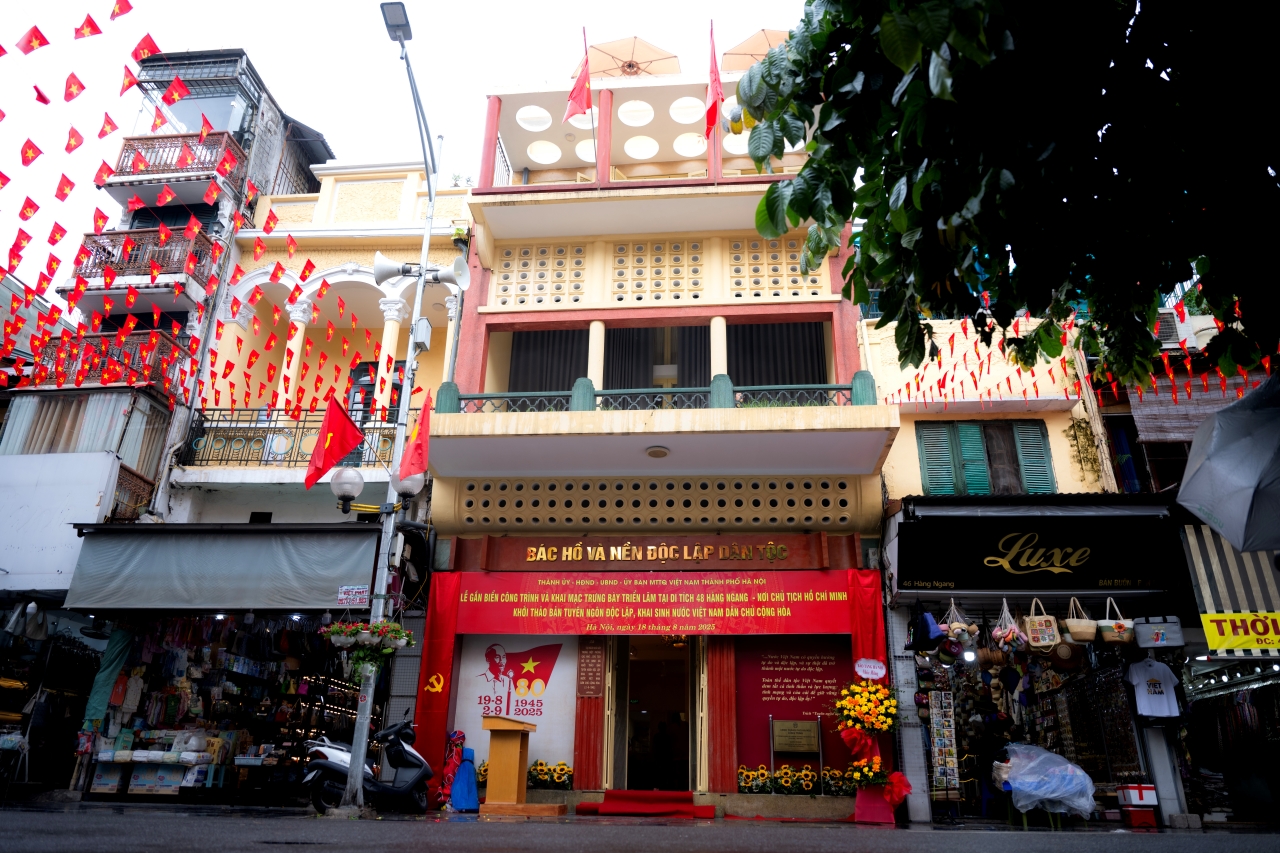
Phố Hàng Ngang dài khoảng 152 mét, nối Hàng Đào với Hàng Đường, tạo thành một đoạn của trục phố buôn bán lâu đời trong khu phố cổ Hà Nội. Con phố gắn với hoạt động kinh doanh tơ lụa, các hiệu buôn của người Hoa và đặc biệt là ngôi nhà số 48, nơi chủ tịch Hồ Chí Minh soạn thảo bản “Tuyên ngôn độc lập” bất hủ.
Xem bản đồ phố Hàng Ngang:https://hoankiemculture.com

Xưa kia, khu vực này thuộc phường Diên Hưng, huyện Thọ Xương. Trong Vũ trung tùy bút, Phạm Đình Hổ viết: “Phường Diên Hưng và phường Đồng Lạc là phố Hàng Áo, bán các thứ tơ lụa vóc nhiễu rất nhiều”. Lời ghi chép cho thấy sự gắn bó giữa Hàng Ngang và Hàng Đào trong hoạt động buôn bán hàng dệt.
Nguồn gốc tên Hàng Ngang đến nay vẫn có những cách giải thích khác nhau. Một giả thuyết cho rằng tên phố xuất phát từ những chiếc cổng chắn ngang đường, được đóng vào ban đêm để bảo đảm an ninh. Tuy nhiên, trong sách Hà Nội nửa đầu thế kỷ XX, nhà nghiên cứu Nguyễn Văn Uẩn lưu ý rằng nhiều phố khác cũng có cổng tương tự và những phố mang tên chữ Hàng tất phải có bán một thứ hàng hóa gì, phần nhiều là hàng đặc biệt hoặc phổ biến, nên “ngang” không rõ là thứ hàng gì. Vì vậy, câu chuyện về tên phố vẫn là một vấn đề cần tiếp tục tìm hiểu. Thời Pháp thuộc, phố mang tên Rue des Cantonnais, nghĩa là phố Người Quảng Đông, phản ánh sự hiện diện của cộng đồng thương nhân người Hoa. Năm 1945, cái tên phố Hàng Ngang được khôi phục.
Đầu thế kỷ XX, phố Hàng Ngang có nhiều cửa hàng kinh doanh chè, thuốc, đồ sứ và tơ lụa. Các hiệu chè Sinh Thái, Ninh Thái và Chính Thái Song Hỷ góp phần tạo nên nhịp buôn bán sôi động. Bên cạnh các thương nhân người Hoa là những gia đình doanh nhân người Việt, tiêu biểu có gia đình ông Trịnh Phúc Lợi với hiệu buôn tơ lụa Phúc Lợi. Người con là Trịnh Văn Bô sau đó tiếp nối và phát triển sản nghiệp.
Địa điểm nổi bật nhất trên phố là ngôi nhà số 48 của gia đình ông Trịnh Văn Bô. Tháng 8/1945, chủ tịch Hồ Chí Minh ở và làm việc tại đây, soạn thảo bản “Tuyên ngôn Độc lập”, được đọc tại quảng trường Ba Đình ngày 2/9/1945, khai sinh ra nước Việt Nam dân chủ cộng hòa. Ngôi nhà 48 Hàng Ngang trở thành nơi ghi dấu một sự kiện quan trọng trong lịch sử dân tộc. Năm 1979, ngôi nhà lưu giữ ký ức về chủ tịch Hồ Chí Minh và sự đóng góp của gia đình ông bà Trịnh Văn Bô với cách mạng này được công nhận là Di tích lịch sử, văn hóa quốc gia.
Đi dọc phố Hàng Ngang, quý khách có thể khám phá sự đan xen giữa lịch sử thương mại và lịch sử dân tộc. Từ những hiệu buôn tơ lụa, chè và thuốc đến ngôi nhà số 48, con phố ngắn này lưu lại nhiều câu chuyện về những con người đã góp phần tạo nên diện mạo và ký ức của Hà Nội.
HANG NGANG STREET – ENDURING TRACES THROUGH THE TURNS OF HISTORY
Hang Ngang is one of Hanoi’s oldest streets, bearing witness to the development of trade and urban life throughout the city’s history. Most notably, No. 48 Hang Ngang Street is where President Ho Chi Minh drafted the Declaration of Independence in 1945.
Traces of a Historic Trading Street
Hang Ngang Street connects Hang Duong and Hang Dao Streets, within an area that was once a bustling commercial centre of Thang Long–Hanoi. With origins dating back centuries, the street was historically part of Dien Hung Ward, Huu Tuc Canton (later renamed Dong Tho Canton), in the former Tho Xuong District.
The name "Hang Ngang" is believed to have originated from the gates that were once erected across the street to control access. At night, these gates were closed and guarded. However, different interpretations of the street's name and its origins still exist.
Historically, Hang Ngang was home to a substantial Chinese community, particularly people of Cantonese origin. Numerous shops and businesses operated along the street, creating a vibrant commercial environment where Chinese and Vietnamese merchants traded alongside one another.
Commercial activities on Hang Ngang were remarkably diverse, ranging from shops selling everyday necessities to larger trading establishments. Together with Hang Dao, Hang Duong, and neighbouring streets, Hang Ngang formed part of the distinctive network of craft and trading streets that characterised old Hanoi.
48 Hang Ngang Street – Where History Was Written
Among the historical landmarks associated with Hang Ngang Street, the house at No. 48 holds particular significance. It is closely connected with the pivotal events of the August Revolution of 1945 and the drafting of Vietnam's Declaration of Independence.
The house belonged to businessman Trinh Van Bo and his wife, Hoang Thi Minh Ho, whose family was known for its patriotism and active support for the revolutionary movement. Architecturally, the building represents Hanoi's traditional tube house, characterised by its narrow frontage and considerable depth, extending through to Hang Can Street.
On August 25, 1945, following the success of the August Revolution in Hanoi, President Ho Chi Minh arrived at the house to work. During his stay at 48 Hang Ngang, he held discussions with fellow revolutionary leaders concerning important matters facing the country.
Most notably, it was in a room on the second floor of this house that President Ho Chi Minh drafted the Declaration of Independence. Just a few days later, on September 2, 1945, he proclaimed the Declaration at Ba Dinh Square, announcing the establishment of the Democratic Republic of Vietnam.
In 1979, the house at 48 Hang Ngang was officially recognised as a Historical and Cultural Relic. Today, the site preserves photographs, archival documents, and historical artefacts associated with President Ho Chi Minh's time working there.
Today, Hang Ngang remains one of the busiest streets in Hanoi's Old Quarter, lined with shops and businesses and filled with a nearly constant flow of pedestrians and visitors. Its closely packed buildings and ever-changing shopfronts reflect the evolving demands of commerce, giving the street the dynamic character of a modern trading centre.
Amid this lively urban atmosphere, historic landmarks such as 48 Hang Ngang continue to be preserved, serving as meaningful connections between contemporary life and the defining moments of Hanoi's history.