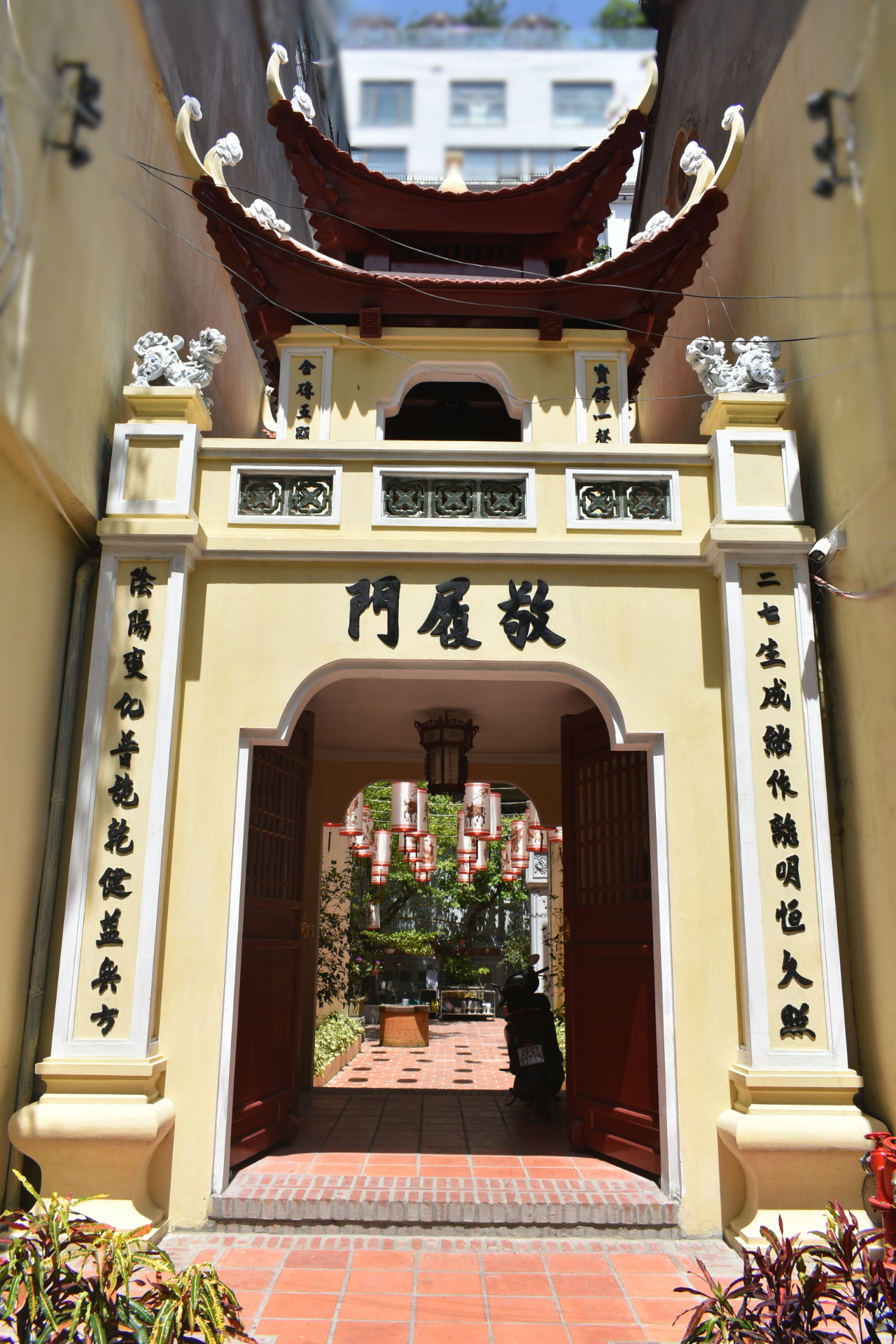
Nằm trên phố Hàng Điếu, một trong những tuyến phố lâu đời của khu phố cổ Hà Nội, đền Hỏa Thần là di tích lịch sử – văn hóa đặc biệt, gắn liền với tín ngưỡng thờ Thần Lửa và khát vọng về một cuộc sống bình an của cư dân kinh thành Thăng Long xưa.
Khác với nhiều ngôi đình, đền thờ thành hoàng, danh nhân hay các vị tổ nghề thủ công truyền thống, đền Hỏa Thần thờ vị thần được dân gian tin là có khả năng chế ngự lửa dữ, bảo vệ con người trước hiểm họa cháy nổ. Chính vì vậy, ngôi đền còn được người dân gọi bằng cái tên gần gũi là nơi thờ "Ông tổ phòng cháy chữa cháy".
Sự hiện diện của đền Hỏa Thần phản ánh một khía cạnh đặc biệt trong lịch sử đời sống đô thị Hà Nội. Đó là mối quan hệ giữa con người với lửa, giữa những nhu cầu sinh hoạt, sản xuất thường ngày với nguy cơ thiên tai, hỏa hoạn luôn thường trực trong một đô thị đông đúc.
Đối với cư dân Thăng Long, lửa vừa là nguồn sống, mang đến ánh sáng, hơi ấm và phục vụ các nghề thủ công, vừa là một trong những tai họa đáng sợ nhất. Người xưa thường nhắc tới "thủy, hỏa, đạo, tặc" để nói về bốn mối nguy lớn đối với cuộc sống, trong đó hỏa hoạn có thể chỉ trong chốc lát thiêu rụi nhà cửa, tài sản và thành quả lao động của nhiều thế hệ.
Bởi vậy, đền Hỏa Thần không đơn thuần là nơi cầu cúng, mà còn là một dấu tích của lịch sử đô thị, lưu giữ ký ức cộng đồng về những hiểm họa từng xảy ra và cách người Hà Nội xưa tìm kiếm sự bảo vệ, đoàn kết để vượt qua thiên tai.
Lịch sử hình thành và phát triển của đền Hỏa Thần
Theo các tư liệu lịch sử và văn bia còn lưu giữ tại di tích, đền Hỏa Thần được khởi dựng vào năm Minh Mệnh thứ 19 (1838), dưới triều Nguyễn.
Vị trí ngôi đền xưa thuộc khu vực thôn Yên Nội, tổng Tiền Túc (sau đổi thành tổng Thuận Mỹ), huyện Thọ Xương, phủ Hoài Đức, nằm phía ngoài Cửa Đông thành Hà Nội.
Đây là thời kỳ khu vực phố phường phía Đông kinh thành phát triển mạnh về thương mại và các nghề thủ công. Nhà ở, cửa hàng và xưởng sản xuất thường nằm xen kẽ, liền sát nhau. Phần lớn các công trình dân dụng được xây dựng bằng gỗ, tre, nứa, tranh và những vật liệu dễ bắt lửa. Trong khi đó, việc đun nấu, thắp sáng và sử dụng lửa phục vụ sản xuất vẫn diễn ra hằng ngày.
Lịch sử ghi nhận Thăng Long – Hà Nội từng phải đối diện với nhiều trận hỏa hoạn lớn. Riêng năm 1828, có tài liệu ghi nhận hai vụ cháy nghiêm trọng, trong đó có vụ thiêu hủy hơn 1.400 nóc nhà thuộc 27 thôn, phường. Đến năm 1837, một trận hỏa hoạn lớn khác tiếp tục xảy ra ở khu vực ngoài thành Hà Nội.
Những tai họa liên tiếp đã khiến việc phòng ngừa và ứng phó với hỏa hoạn trở thành một vấn đề cấp thiết đối với chính quyền và cư dân đô thị.
Trong hoàn cảnh đó, năm 1838, ngôi miếu thờ Hỏa Thần được dựng lên với mong muốn cầu xin thần linh che chở, giúp dân chúng tránh khỏi hiểm họa cháy nhà, cháy phố. Theo hồ sơ di tích, việc xây dựng còn có sự tham gia của một số nho sĩ giữ trọng trách trong bộ máy quản lý hành chính Thăng Long thời Nguyễn.
Ban đầu, công trình có quy mô khiêm tốn, được xây dựng bằng những vật liệu tương đối đơn sơ. Đến năm Thiệu Trị thứ nhất (1841), đền được trùng tu, sử dụng vật liệu bền vững hơn, mở rộng quy mô thờ tự. Năm 1848, công trình tiếp tục được bổ sung các hạng mục phương đình và tiền tế, góp phần tạo nên bố cục kiến trúc truyền thống còn được nhận diện đến ngày nay.
Qua các triều vua Nguyễn, đền nhiều lần được tu sửa và ban sắc phong, thể hiện sự ghi nhận đối với vị thần được nhân dân tôn thờ.
Khi người Pháp tiến hành quy hoạch, mở mang đường phố Hà Nội, cảnh quan đô thị quanh di tích dần thay đổi. Những dãy nhà mặt phố được xây dựng khiến đền Hỏa Thần có thời gian nằm khuất phía sau các công trình dân cư. Trải qua nhiều biến động, diện tích và không gian di tích từng bị thu hẹp, một số hạng mục xuống cấp và chịu ảnh hưởng của quá trình đô thị hóa.
Ngày 27/8/1996, đền Hỏa Thần được Bộ Văn hóa – Thông tin công nhận là Di tích quốc gia theo Quyết định số 1964/QĐ-VH.
Trong những năm gần đây, công tác tu bổ, tôn tạo tiếp tục được quan tâm thực hiện, đặc biệt là đợt hoàn thành tu bổ năm 2024 và việc chỉnh trang cổng đền năm 2025, góp phần gìn giữ không gian kiến trúc, cảnh quan và nâng cao giá trị của di tích trong đời sống đương đại.
Truyền thuyết về Đức Hỏa Thần – Vị thần chế ngự ngọn lửa
Đền Hỏa Thần có tên chữ là Hỏa Thần từ, thờ Đức Quang Hoa Mã Nguyên Súy, vị thần được dân gian tôn kính là đấng cai quản lửa và có khả năng trừ hỏa tai.
Thần tích về Đức Hỏa Thần mang dấu ấn giao thoa của nhiều hệ tư tưởng, tín ngưỡng, đặc biệt là Phật giáo, Đạo giáo và tín ngưỡng dân gian.
Theo truyền thuyết lưu truyền tại di tích, Hỏa Thần vốn là một ngọn đèn trong cửa Phật, thường được gọi là Phật đăng. Nhờ ngày ngày được nghe thuyết pháp, tụng kinh, ngọn đèn dần giác ngộ giáo lý và trở thành môn đệ của Phật gia.
Tuy nhiên, do bản tính nóng nảy, không giữ được giới luật, Hỏa Thần phải xuống trần gian, đầu thai vào một gia đình họ Phùng. Sau quá trình tu tập, rèn luyện và đắc đạo, Thần được trở lại thiên giới, trở thành môn đệ của Ngọc Hoàng Thượng Đế, được giao nhiệm vụ trừ hỏa tai, bảo vệ dân chúng trước những hiểm họa do lửa gây ra.
Câu chuyện truyền thuyết mang ý nghĩa biểu tượng sâu sắc. Ngọn lửa vốn có bản tính mạnh mẽ, nóng nảy và khó kiểm soát, nhưng thông qua sự tu dưỡng và giác ngộ đã trở thành sức mạnh bảo vệ con người.
Qua đó, người xưa gửi gắm quan niệm rằng thiên nhiên dù có sức mạnh dữ dội đến đâu cũng cần được nhận thức, điều hòa và kiểm soát.
Trong hậu cung đền Hỏa Thần, tượng Đức Hỏa Thần được thờ trang trọng cùng hai vị thị giả thường được gọi là Thiên Lý Nhãn và Thuận Phong Nhĩ. Theo quan niệm dân gian, Thiên Lý Nhãn có khả năng nhìn thấy những sự việc ở xa, còn Thuận Phong Nhĩ có thể nghe thấu âm thanh từ mọi nơi. Hai vị tượng trưng cho khả năng quan sát, phát hiện và truyền đạt thông tin, góp phần hỗ trợ Đức Hỏa Thần trong việc nhận biết những hiểm họa có thể xảy ra.
Dưới góc nhìn văn hóa, hình tượng ấy cũng gợi liên tưởng đến yêu cầu quan trọng nhất trong ứng phó hỏa hoạn: phải phát hiện sớm nguy cơ và kịp thời thông báo để cộng đồng cùng hành động.
Đời sống trị hỏa và kinh nghiệm ứng phó hỏa hoạn của người Thăng Long – Hà Nội xưa
Lịch sử đền Hỏa Thần không thể tách rời câu chuyện về công tác phòng ngừa và chống hỏa hoạn trong đời sống cư dân Thăng Long – Hà Nội.
Trong một đô thị đông đúc, nơi mỗi ngôi nhà vừa có thể là nơi cư trú, vừa là cửa hàng buôn bán hoặc xưởng sản xuất, nguy cơ cháy luôn hiện hữu. Một đám lửa nhỏ nếu không được khống chế kịp thời có thể nhanh chóng lan qua những mái nhà liền kề, trở thành thảm họa của cả khu phố.
Từ thực tế đó, người dân Thăng Long đã hình thành nhiều kinh nghiệm phòng hỏa, cứu hỏa, kết hợp giữa quy định quản lý của chính quyền với sự phối hợp của cộng đồng.
Canh phòng và phát hiện hỏa hoạn
Tại các phường, thôn, việc tuần tra, canh gác ban đêm có vai trò đặc biệt quan trọng. Một số nơi thiết lập các điếm canh, bố trí người trực để phát hiện những dấu hiệu bất thường như khói, ánh lửa hoặc tiếng kêu cứu.
Trong điều kiện chưa có những phương tiện thông tin liên lạc hiện đại, tiếng mõ, tiếng trống và tiếng chuông được sử dụng như những tín hiệu báo động.
Khi xảy ra hỏa hoạn, việc đánh trống, gõ mõ, hô hoán có thể nhanh chóng huy động người dân trong phường, phố đến hỗ trợ chữa cháy.
Đáng chú ý, theo ghi chép trong sách Đường phố Hà Nội của Nguyễn Vinh Phúc và Trần Huy Bá, đền Hỏa Thần trước đây từng có một quả chuông đồng lớn. Người dân tin rằng khi xảy ra hỏa hoạn, tiếng chuông được thỉnh lên sẽ báo cho Hỏa Thần biết để về cứu giúp.
Từ góc độ đời sống xã hội, tiếng chuông ấy còn mang ý nghĩa như một tín hiệu tập hợp cộng đồng, nhắc nhở mọi người về hiểm họa đang xảy ra và nhu cầu khẩn trương phối hợp ứng cứu.
Chuẩn bị dụng cụ và nguồn nước chữa cháy
Trước khi các phương tiện chữa cháy cơ giới xuất hiện, người dân chủ yếu sử dụng những dụng cụ thủ công để khống chế đám cháy.
Tại các gia đình, cửa hàng hoặc những vị trí canh phòng có thể bố trí vại nước, thùng nước, gầu múc, thang gỗ và câu liêm. Câu liêm là dụng cụ có móc sắt gắn trên cán dài, dùng để kéo, giật hoặc tháo dỡ những bộ phận kiến trúc đang cháy, nhất là phần mái làm bằng vật liệu dễ bắt lửa.
Nguồn nước từ giếng, ao, hồ và các nơi chứa nước đóng vai trò quan trọng đối với việc chữa cháy. Khi có hỏa hoạn, người dân cùng nhau vận chuyển, chuyền nước đến vị trí xảy ra đám cháy.
Trong một số trường hợp, người xưa còn phải chủ động phá dỡ một phần công trình để ngăn lửa lan sang những khu vực lân cận. Tư liệu nghiên cứu về phố phường Thăng Long – Hà Nội thậm chí ghi nhận việc sử dụng voi để kéo đổ nhà đang cháy trong quá trình ứng cứu.
Những biện pháp ấy tuy thô sơ nhưng phản ánh kinh nghiệm thực tiễn của cư dân đô thị, đặc biệt là nhận thức về sự nguy hiểm của các đám cháy lan trong khu phố có mật độ xây dựng dày đặc.
Tổ chức cộng đồng và trách nhiệm phòng hỏa
Việc phòng chống hỏa hoạn xưa không hoàn toàn dựa vào sự tự giác của từng gia đình mà còn gắn với trách nhiệm của các phường, thôn và chính quyền quản lý đô thị.
Các quy định về sử dụng lửa, bảo vệ kho tàng, dự trữ nước và xử lý người gây cháy được chính quyền qua nhiều thời kỳ quan tâm. Triều đình nhà Nguyễn từng có những chỉ dụ hạn chế việc để vật liệu dễ cháy gần các kho chứa hàng hóa, vũ khí và những công trình quan trọng.
Đồng thời, chính quyền cũng áp dụng các biện pháp xử phạt đối với hành vi gây cháy, nhất là những trường hợp để lửa lan rộng, gây thiệt hại cho cộng đồng. Sau những trận hỏa hoạn lớn, việc cứu trợ, cấp tiền và lương thực cho người bị nạn cũng được ghi nhận trong sử liệu.
Điều đáng chú ý là quan niệm về phòng hỏa không chỉ tồn tại trong những quy định hành chính mà còn được thể hiện ngay trên văn bia tại đền Hỏa Thần.
Tấm bia Hỏa thần miếu trùng tu bi ký dựng năm 1841 cho thấy người xưa đã nhận thức rằng hỏa hoạn là tai họa cần có biện pháp ứng phó, đồng thời nhấn mạnh đến phương kế và trách nhiệm quản lý.
Như vậy, tín ngưỡng thờ Hỏa Thần không đồng nghĩa với việc chỉ trông chờ vào sự che chở của thần linh. Ngược lại, đời sống trị hỏa của người Thăng Long cho thấy sự tồn tại song hành của hai phương diện: cầu mong sự bảo hộ về tinh thần và chủ động thực hiện các biện pháp phòng ngừa, cứu chữa trong thực tế.
Đây chính là giá trị xã hội đặc biệt của đền Hỏa Thần khi nhìn từ lịch sử phát triển đô thị.
Kiến trúc và không gian thờ tự
Đền Hỏa Thần hiện có diện tích khuôn viên khoảng 500m², là một trong những di tích có quy mô tương đối lớn so với nhiều công trình tín ngưỡng khác trong khu phố cổ Hà Nội.
Tổng thể kiến trúc đền được tổ chức theo bố cục hình chữ Công (工), gồm ba bộ phận chính: tiền tế, phương đình và cung cấm.
Tiền tế là công trình nằm phía trước, được xây dựng theo lối nhà ngang ba gian truyền thống, với hệ thống kết cấu gỗ, mái ngói và các chi tiết trang trí mang đặc trưng kiến trúc thời Nguyễn. Tại đây có bức hoành phi mang ba chữ "Hỏa Thần từ", khẳng định tên gọi và chức năng thờ tự của di tích.
Phương đình nằm ở trung tâm, là không gian chuyển tiếp giữa tiền tế và hậu cung. Đây cũng là khu vực tập trung nhiều mảng chạm khắc nghệ thuật đặc sắc nhất của ngôi đền.
Các cấu kiện gỗ được trang trí bằng những họa tiết vân mây, lá lật, hoa sen, đầu rồng, chim phượng và hình tượng nghê. Những chi tiết chạm khắc không chỉ mang giá trị mỹ thuật mà còn thể hiện quan niệm thẩm mỹ và biểu tượng tâm linh truyền thống.
Cung cấm, hay hậu cung, là không gian thờ Đức Hỏa Thần. Tượng Thần có gương mặt phương phi, dáng vẻ uy nghiêm, mặc long bào và được đặt trong khám thờ chạm rồng trang trọng.
Một nét đặc biệt khác trong không gian đền là sự kết hợp nhiều hình thức thờ tự. Bên cạnh Đức Hỏa Thần, tại di tích còn phối thờ Phật, Tam tòa Thánh Mẫu và các vị thần linh khác theo tín ngưỡng dân gian.
Sự kết hợp này phản ánh đặc trưng giao thoa giữa Phật giáo, Đạo giáo và tín ngưỡng thờ Mẫu trong đời sống tâm linh của người Việt, đồng thời cho thấy quá trình bổ sung và biến đổi chức năng thờ tự của ngôi đền qua nhiều thế hệ.
Đền Hỏa Thần còn lưu giữ nhiều di vật có giá trị lịch sử, văn hóa và nghệ thuật, gồm các bức hoành phi, câu đối, chuông đồng, hệ thống tượng thờ, bát hương cổ và những đạo sắc phong từ thời Nguyễn.
Những hiện vật này là nguồn tư liệu quan trọng, giúp nghiên cứu lịch sử hình thành, sự phát triển của ngôi đền cũng như đời sống tín ngưỡng của cư dân Hà Nội trong các thế kỷ XIX và XX.
Lễ hội truyền thống và đời sống tín ngưỡng cộng đồng
Trải qua gần hai thế kỷ tồn tại, đền Hỏa Thần vẫn giữ vai trò là nơi sinh hoạt văn hóa, tín ngưỡng của cư dân địa phương.
Hằng năm, người dân tổ chức các nghi lễ dâng hương, tưởng niệm Đức Hỏa Thần, trong đó hai ngày có ý nghĩa quan trọng là ngày sinh của Thần (28 tháng 3 âm lịch) và ngày hóa của Thần (28 tháng 9 âm lịch).
Vào những dịp này, cộng đồng cùng thực hiện các nghi thức tế lễ truyền thống, dâng hương tưởng nhớ công đức vị thần được tin là đã bảo hộ cho cuộc sống của nhân dân.
Không chỉ mang ý nghĩa cầu bình an, những hoạt động tại đền còn là dịp để cư dân các thế hệ gặp gỡ, cùng tham gia gìn giữ những phong tục, tập quán và giá trị văn hóa lâu đời của khu phố cổ.
Đặc biệt, với ý nghĩa gắn liền với công tác phòng chống hỏa hoạn, những nghi lễ tưởng niệm Đức Hỏa Thần ngày nay còn trở thành cơ hội để tuyên truyền, giáo dục và nâng cao ý thức phòng cháy, chữa cháy trong cộng đồng.
Từ một tín ngưỡng hình thành trong hoàn cảnh con người phải đối mặt với thiên tai, hỏa hoạn, đền Hỏa Thần từng bước trở thành nơi kết nối ký ức lịch sử với những trách nhiệm thiết thực của đời sống hiện đại.
Giá trị di sản – Từ tín ngưỡng truyền thống đến thông điệp an toàn đô thị hôm nay
Đền Hỏa Thần tại số 30 phố Hàng Điếu là một di tích mang nhiều lớp giá trị lịch sử, kiến trúc, nghệ thuật và văn hóa tín ngưỡng. Tuy nhiên, điểm nổi bật nhất của di tích chính là câu chuyện về mối quan hệ giữa con người, thiên nhiên và đời sống đô thị.
Thông qua tín ngưỡng thờ Hỏa Thần, chúng ta có thể hiểu hơn về những nỗi lo của cư dân Thăng Long xưa trước nguy cơ hỏa hoạn, đồng thời nhận diện những kinh nghiệm phòng ngừa và ứng phó thiên tai được cộng đồng hình thành, tích lũy qua nhiều thế hệ.
Ngôi đền cho thấy tinh thần đoàn kết, tương trợ của cư dân phố phường không chỉ được thể hiện trong lao động, sản xuất, buôn bán mà còn được phát huy khi cộng đồng cùng nhau đối diện với hiểm họa.
Ngày nay, trong bối cảnh khu phố cổ Hà Nội tiếp tục đối diện với những thách thức về mật độ dân cư, hạ tầng kỹ thuật và an toàn phòng cháy, chữa cháy, câu chuyện của đền Hỏa Thần vẫn giữ nguyên ý nghĩa thời sự.
Nếu trước kia người dân sử dụng tiếng chuông, tiếng mõ, vại nước và câu liêm để ứng phó với hỏa hoạn, thì ngày nay những phương tiện kỹ thuật hiện đại, hệ thống báo cháy và lực lượng cứu hộ chuyên nghiệp đã trở thành những yếu tố quan trọng bảo vệ đô thị. Dẫu vậy, tinh thần chủ động phòng ngừa, cảnh giác trước nguy cơ và trách nhiệm phối hợp của cộng đồng vẫn là những giá trị không thay đổi.
Bởi thế, bảo tồn và phát huy giá trị đền Hỏa Thần không chỉ là gìn giữ một công trình kiến trúc cổ hay duy trì một nghi lễ tín ngưỡng truyền thống, mà còn là tiếp nối câu chuyện về cách người Hà Nội qua các thời kỳ chung sống với thiên nhiên, ứng phó với hiểm họa và bảo vệ sự bình yên cho từng ngôi nhà, từng tuyến phố.
Từ niềm tin vào sự che chở của Đức Hỏa Thần đến ý thức chủ động phòng ngừa hỏa hoạn, ngôi đền là minh chứng cho một triết lý giản dị nhưng bền vững: bình yên của mỗi gia đình luôn gắn liền với trách nhiệm và sự chung tay của cả cộng đồng.
1. Hoa Than Temple – Preserving the Memory of Fires in the Ancient Capital
Located on Hang Dieu Street, one of the historic streets of Hanoi’s Old Quarter, Hoa Than Temple is a distinctive historical and cultural heritage site associated with the worship of the Fire Deity and the aspirations of Thang Long’s inhabitants for a peaceful and secure life.
Unlike many communal houses and temples dedicated to village guardian deities, historical figures or the founding masters of traditional crafts, Hoa Than Temple honours a deity believed to possess the power to control destructive fires and protect people from fire-related disasters. For this reason, the deity is also informally regarded by local people as the patron of firefighting and fire prevention.
The presence of Hoa Than Temple reflects a distinctive aspect of Hanoi’s urban history: the relationship between human beings and fire, and the balance between everyday domestic and productive activities and the constant threat of fire in a densely populated city.
For the inhabitants of ancient Thang Long, fire was both a source of life, providing light, warmth and energy for traditional crafts, and one of the most feared disasters. An old Vietnamese expression, “Thuy, Hoa, Dao, Tac” – floods, fires, robbery and banditry – identifies four major threats to human life. Among these, fire could destroy homes, possessions and the accumulated achievements of generations within moments.
Hoa Than Temple is therefore more than a place of worship. It is a testament to the city’s urban history, preserving collective memories of past disasters and illustrating how Hanoi’s inhabitants sought spiritual protection, solidarity and resilience in the face of adversity.
2. The History and Development of Hoa Than Temple
According to historical records and stone inscriptions preserved at the site, Hoa Than Temple was originally established in 1838, the nineteenth year of Emperor Minh Menh’s reign under the Nguyen Dynasty.
The temple was historically situated in Yen Noi Hamlet, Tien Tuc Canton (later renamed Thuan My Canton), Tho Xuong District, Hoai Duc Prefecture, outside the Eastern Gate of the Hanoi Citadel.
During this period, the streets and residential quarters to the east of the citadel experienced significant growth in commerce and traditional handicraft production. Houses, shops and workshops stood closely together, often sharing the same urban spaces. Most domestic buildings were constructed from timber, bamboo, thatch and other highly combustible materials, while open flames were used daily for cooking, lighting and manufacturing.
Historical records indicate that Thang Long – Hanoi suffered numerous devastating fires. In 1828 alone, certain historical sources record two major fires, one of which destroyed more than 1,400 houses across 27 hamlets and urban wards. Another serious fire broke out outside the Hanoi Citadel in 1837.
These recurring disasters made fire prevention and emergency response increasingly urgent concerns for both the authorities and the urban population.
Against this historical backdrop, a shrine dedicated to the Fire Deity was established in 1838. Its purpose was to seek divine protection against fires that threatened homes, businesses and entire neighbourhoods. According to heritage records, several Confucian scholars holding administrative positions in Thang Long under the Nguyen Dynasty also participated in its establishment.
The original shrine was modest in scale and constructed using relatively simple materials. In 1841, the first year of Emperor Thieu Tri’s reign, it underwent restoration and expansion using more durable materials. Further additions were made in 1848, including the central pavilion and front ceremonial hall, contributing to the traditional architectural layout that remains recognisable today.
Throughout the Nguyen Dynasty, the temple underwent several restorations and received royal decrees of recognition, demonstrating official acknowledgement of the deity worshipped by the local community.
During the French colonial period, urban planning and street development gradually transformed the surrounding landscape. Newly constructed street-front buildings concealed the temple behind rows of residential and commercial properties. Over time, the temple grounds became increasingly restricted, while several architectural elements deteriorated under the pressures of urban development.
On 27 August 1996, Hoa Than Temple was officially designated a National Heritage Site by the Ministry of Culture and Information under Decision No. 1964/QD-VH.
In recent years, renewed efforts have been made to conserve and restore the temple, particularly through the restoration works completed in 2024 and the refurbishment of its entrance gate in 2025. These initiatives have contributed to preserving its architectural character, improving its surroundings and revitalising its heritage values within contemporary urban life.
3. The Legend of the Fire Deity – Master of the Flames
Known by its traditional name Hoa Than Tu, the temple is dedicated to Quang Hoa Ma Nguyen Suy, a deity revered in folk belief for his ability to govern fire, prevent fire-related disasters and protect human communities.
The legend of the Fire Deity reflects the convergence of several religious and philosophical traditions, particularly Buddhism, Taoism and Vietnamese folk beliefs.
According to the legend associated with the temple, the Fire Deity originally existed as a sacred oil lamp in a Buddhist sanctuary, known as Phat Dang, or the Buddha’s Lamp. Through constantly listening to Buddhist teachings and the chanting of scriptures, the lamp gradually attained spiritual awareness and became a disciple of the Buddha.
However, owing to his fiery temperament and inability to observe religious discipline, he was sent to the mortal world, where he was reincarnated into a family bearing the surname Phung.
After a period of spiritual cultivation, self-discipline and enlightenment, he returned to the celestial realm and became a disciple of the Jade Emperor. He was entrusted with the responsibility of controlling destructive fires, preventing fire-related disasters and protecting humanity.
This legend carries profound symbolic meaning. Fire, inherently powerful, volatile and difficult to control, is transformed through spiritual cultivation and enlightenment into a protective force that serves humanity.
Through this narrative, earlier generations expressed the belief that even the most powerful forces of nature must be understood, regulated and brought into balance.
Within the temple’s inner sanctuary, the Fire Deity is solemnly enshrined alongside two celestial attendants, commonly known as Thien Ly Nhan and Thuan Phong Nhi.
According to folk belief, Thien Ly Nhan possesses the ability to see events occurring over great distances, while Thuan Phong Nhi can hear sounds from faraway places. Together, they represent extraordinary powers of observation and communication, assisting the Fire Deity in detecting potential dangers.
From a cultural perspective, these figures also evoke two fundamental principles of effective fire prevention and emergency response: the early detection of danger and the timely communication of warnings so that communities can act together.
4. Traditional Fire Prevention and Emergency Response in Thang Long – Hanoi
The history of Hoa Than Temple is inseparable from the broader story of how the inhabitants of Thang Long – Hanoi prevented and responded to fires.
In a densely populated urban environment, where individual buildings frequently served simultaneously as residences, commercial establishments and manufacturing workshops, the risk of fire was ever-present.
Without timely intervention, even a small flame could rapidly spread across adjoining rooftops and develop into a disaster affecting an entire neighbourhood.
In response to these challenges, the inhabitants of Thang Long developed various methods of fire prevention and firefighting, combining administrative regulations with practical experience and collective community action.
Fire watch and early detection
Night-time patrols and neighbourhood watch arrangements played an important role in protecting urban wards and residential settlements.
In certain areas, watch posts were established and guards were assigned to identify unusual signs of danger, including smoke, flames and cries for assistance.
Before the introduction of modern communication technologies, wooden slit drums, drums and bells served as warning instruments.
When a fire broke out, these instruments were sounded alongside verbal warnings to mobilise residents and encourage immediate collective action.
According to Duong Pho Ha Noi (The Streets of Hanoi) by Nguyen Vinh Phuc and Tran Huy Ba, Hoa Than Temple once housed a large bronze bell. Local people believed that ringing the bell during a fire would alert the Fire Deity and summon his divine assistance.
From a social perspective, the sound of the bell also served as a means of gathering the community, warning residents of approaching danger and encouraging collective emergency response.
Firefighting equipment and water supplies
Before the introduction of mechanised firefighting equipment, residents relied primarily on simple manual tools to control fires.
Households, shops and designated watch posts could be equipped with large water jars, buckets, water scoops, wooden ladders and traditional firefighting hooks known as cau liem.
A cau liem consisted of a metal hook attached to a long pole. It was used to pull down or dismantle burning architectural elements, particularly roofs constructed from combustible materials.
Water drawn from wells, ponds, lakes and water storage containers played an essential role in firefighting. When fires occurred, residents worked together to transport water, often passing buckets from person to person to reach the affected buildings.
In certain circumstances, sections of buildings were deliberately dismantled to prevent flames from spreading to neighbouring properties. Historical studies of Thang Long – Hanoi even record instances in which elephants were employed to pull down burning buildings during firefighting operations.
Although relatively rudimentary, these measures reflected the practical knowledge accumulated by urban communities, particularly their understanding of how rapidly fires could spread through densely built neighbourhoods.
Community organisation and responsibility for fire prevention
Traditional fire prevention did not rely solely on the awareness and responsibility of individual households. It was also closely connected to the collective responsibilities of urban wards, local settlements and administrative authorities.
Throughout different historical periods, the authorities introduced regulations concerning the use of fire, the protection of warehouses, the storage of water and penalties for causing fires.
The Nguyen Dynasty issued directives restricting the placement of combustible materials near warehouses, armouries and other important structures.
Penalties were also imposed on individuals responsible for fires, particularly in cases where negligence allowed flames to spread and cause extensive damage to the wider community. Historical records additionally document relief measures, including financial assistance and food supplies distributed to victims following major fires.
Significantly, awareness of fire prevention was expressed not only through administrative regulations but also through the stone inscriptions preserved at Hoa Than Temple itself.
The inscription entitled Hoa Than Mieu Trung Tu Bi Ky (Stele Inscription Commemorating the Restoration of the Fire Deity Shrine), erected in 1841, reflects an understanding of fire as a disaster requiring practical responses, appropriate preventive measures and responsible administration.
The worship of the Fire Deity, therefore, did not imply a passive dependence on divine protection. Instead, the traditional approach to fire prevention in Thang Long reflected two complementary dimensions: seeking spiritual reassurance and actively implementing practical measures to prevent and respond to disasters.
This dual approach represents one of the temple’s most distinctive social and cultural values within the history of urban development.
5. Architecture and Sacred Spaces
Covering an area of approximately 500 square metres, Hoa Than Temple is relatively substantial in comparison with many other religious heritage sites within Hanoi’s Old Quarter.
Its overall architectural layout follows the form of the Chinese character Gong (工), consisting of three principal components: the front ceremonial hall, the central pavilion and the inner sanctuary.
The front ceremonial hall (Tien Te)
Situated at the front of the temple, the ceremonial hall follows a traditional three-bay architectural arrangement, featuring timber structures, tiled roofs and decorative elements characteristic of the Nguyen Dynasty.
The hall houses a horizontal inscribed board bearing the three characters Hoa Than Tu, affirming the identity and religious function of the temple.
The central pavilion (Phuong Dinh)
Located at the centre of the architectural complex, the pavilion serves as a transitional space between the front ceremonial hall and the inner sanctuary. It also contains some of the temple’s most remarkable decorative carvings.
Its timber components are adorned with cloud motifs, stylised foliage, lotus flowers, dragons, phoenixes and Nghe, a mythical guardian creature found in Vietnamese traditional architecture.
These decorative elements possess considerable artistic value while reflecting traditional aesthetic principles, spiritual symbolism and religious beliefs.
The inner sanctuary (Cung Cam)
The inner sanctuary is the most sacred part of the temple, dedicated to the worship of the Fire Deity.
The deity is represented with a dignified expression and an imposing appearance, dressed in ceremonial robes decorated with dragon motifs and seated within an elaborately carved shrine.
Another distinctive feature of Hoa Than Temple is the coexistence of different forms of religious worship. In addition to the Fire Deity, the temple also accommodates Buddhist worship, the worship of the Three Mother Goddesses and other deities associated with Vietnamese folk beliefs.
This combination reflects the interaction between Buddhism, Taoism and Mother Goddess worship within Vietnamese spiritual life. It also demonstrates how the temple’s religious functions have evolved and expanded over successive generations.
Hoa Than Temple preserves numerous artefacts of historical, cultural and artistic significance, including horizontal inscribed boards, parallel couplets, bronze bells, religious statues, antique incense burners and royal decrees dating from the Nguyen Dynasty.
These objects constitute valuable historical sources for understanding the establishment and development of the temple, as well as the spiritual life of Hanoi’s inhabitants throughout the nineteenth and twentieth centuries.
6. Traditional Festivals and Community Spiritual Life
Having existed for nearly two centuries, Hoa Than Temple continues to serve as an important place of cultural and spiritual life for the local community.
Every year, residents organise incense offerings and commemorative ceremonies in honour of the Fire Deity. Two particularly significant occasions are the deity’s birth anniversary, observed on the twenty-eighth day of the third lunar month, and the anniversary of his departure from the mortal world, observed on the twenty-eighth day of the ninth lunar month.
On these occasions, community members gather to perform traditional ceremonial rituals, offer incense and express gratitude to the deity believed to protect their lives and livelihoods.
Beyond prayers for peace and protection, activities at the temple provide opportunities for different generations to come together, maintain traditional customs and safeguard the cultural heritage of Hanoi’s Old Quarter.
Given the temple’s distinctive association with fire prevention, contemporary commemorative activities also provide opportunities to promote public education and raise community awareness of fire safety and emergency preparedness.
Originating from a system of beliefs developed in response to natural hazards and fires, Hoa Than Temple has gradually become a place where historical memories are connected with the practical responsibilities of contemporary urban life.
7. Heritage Values – From Traditional Beliefs to Contemporary Urban Safety
Hoa Than Temple at 30 Hang Dieu Street embodies multiple layers of historical, architectural, artistic and spiritual heritage values. Its most distinctive significance, however, lies in the story it tells about the relationship between humanity, nature and urban life.
Through the worship of the Fire Deity, we gain a deeper understanding of the concerns experienced by the inhabitants of ancient Thang Long in the face of fire-related hazards. We can also recognise the knowledge, practices and strategies developed by local communities over generations to prevent and respond to disasters.
The temple demonstrates that solidarity and mutual assistance among urban residents were expressed not only through everyday labour, craftsmanship and commerce, but also through collective action in times of danger.
Today, as Hanoi’s Old Quarter continues to face challenges associated with population density, urban infrastructure and fire safety, the story of Hoa Than Temple remains highly relevant.
While earlier generations relied on bells, wooden slit drums, water jars and traditional firefighting hooks, contemporary society benefits from advanced technologies, fire detection systems and professional emergency services.
Nevertheless, the fundamental principles of proactive prevention, awareness of potential risks and collective responsibility remain unchanged.
Preserving and promoting the heritage values of Hoa Than Temple is therefore not simply a matter of conserving an ancient architectural monument or maintaining traditional religious ceremonies. It is also about continuing the story of how generations of Hanoi’s inhabitants have lived alongside the forces of nature, responded to disasters and worked together to safeguard their homes, neighbourhoods and urban environment.
From the belief in the protective power of the Fire Deity to the practice of proactive fire prevention, Hoa Than Temple embodies a simple yet enduring philosophy: the safety and well-being of every household depend upon the shared responsibility and collective efforts of the entire community.